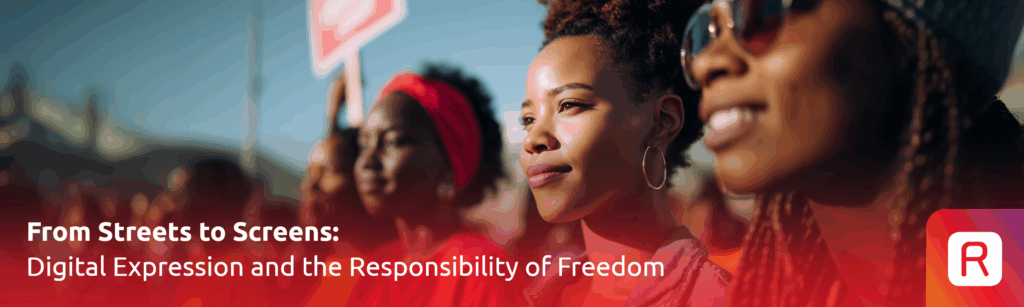
From Streets to Screens: Digital Expression and the Responsibility of Freedom
April is Freedom Month in South Africa, a time to reflect, celebrate, and remember. It marks the moment the country held its first democratic elections, bringing an end to apartheid and the beginning of a new era.
But that freedom did not just happen. It was fought for. Built on years of resistance, courage, and protest, not only in the streets of South Africa, but across the world. The South Africa we know today exists because people refused to stay silent.
Fast forward to now, and protest does not look the same.
Yes, people still take to the streets. But today, movements also live on our screens. Digital activism and online activism have become powerful tools for expression. Hashtags, viral posts, and digital communities allow people to show anger, demand justice, and rally others. The purpose has evolved, but the goal remains the same.
Before, South Africa protest required showing up in person. Whether in the streets, townships, schools, or workplaces, rallies, marches, and sit-ins were the main forms of protest. These demonstrations often demanded extreme bravery and commitment, as participants faced the risk of arrest, violence, and in some cases, even worse.
People risked their safety to be heard and to spark change. Protest created a powerful sense of unity and drew attention to injustice through strength in numbers. The Soweto Uprising is a striking example of how protest can make a difference and leave a lasting impact.
Digital Expression
With smartphones and widespread internet access, everyone now has a platform and a voice to drive change. With just a click, people can join global movements from the comfort of their homes. Whether it’s reposting, liking, commenting, or sharing content, from infographics to powerful videos, people are not only spreading awareness but also educating themselves on issues they might not fully understand. Platforms like Instagram, TikTok, Facebook, Twitter, YouTube, and even communities on Discord and Reddit have become modern spaces for online activism in South Africa.
Thanks to algorithms, a single post can go viral within minutes, taking someone’s voice from local to global without the need for traditional media. A simple hashtag can connect someone in South Africa to conversations happening across the world in real time. Every connection matters, and in today’s digital age, the ability to link with others across borders has never been more powerful.
Online activism also creates a safer space for people to speak out on issues, both locally and internationally. But being online doesn’t make you immune to criticism or backlash. The digital world still comes with its own risks and responsibilities.
The internet has completely reshaped what expression looks like today. Gone are the posters, now it’s memes, videos, and livestreams leading the conversation. More than ever, social media has become a tool for creative storytelling, giving people new and powerful ways to be seen, heard, and understood. Modern activism in South Africa relies on this balance of online and offline efforts.
The Catch
While digital activism is powerful and essential, it’s far from perfect. Too often, people fall into what’s known as “slacktivism,” where they like, share, or repost content without taking any real action beyond the screen. Awareness may grow, but awareness alone doesn’t guarantee change.
Social media also moves at an unforgiving pace. The news cycle shifts within days, sometimes even hours, causing important causes to lose momentum just as quickly as they gain attention.
On top of that, algorithms play a major role in shaping what we see and what we don’t. They decide which stories stay on our timelines and which ones fade away. In some cases, content can be censored or removed altogether. More often, algorithms favour sensational content, pushing it to the forefront while more important but less attention-grabbing issues are overlooked.
Digital activism has opened doors, but it also comes with limitations that can’t be ignored.
Misinformation and Manipulation
The internet has given everyone a powerful platform to share their views and beliefs. But with that freedom comes a darker edge. Bad actors now use graphic design tools and advanced AI to create fake statistics and misleading visuals designed to confuse, manipulate, and push specific narratives.
Artificial intelligence has made it even easier to fabricate images and videos of prominent figures, putting words in their mouths or placing them in situations that never happened. The goal is simple: to discredit, divide, and weaken trust among their supporters.
These tactics are not entirely new. They are just more sophisticated. What used to be physical attempts to disrupt movements, like planting agitators in crowds to cause chaos, has now evolved into digital manipulation at scale. The battlefield has shifted online, but the intention remains the same: to distort reality and influence perception.
Conclusion
The internet has transformed the way we protest and make our voices heard. People have shifted from taking to the streets to sharing posts online, from putting themselves in risky situations to campaigning for change from the comfort of their own beds. While the way we express ourselves has evolved, the goal remains the same: to be seen, heard, and create impact.
Just because activism has gone digital doesn’t mean the voice loses its power. Freedom Month is the perfect time to reflect on how we are using our platforms and to ask ourselves: are we amplifying our voices meaningfully in today’s South Africa and making a mark on the international stage? Every connection matters, whether it’s in person or online, and our collective voices have the power to shape the future.
From Streets to Screens: Digital Expression and the Responsibility of Freedom
Thabo Peyi
Apr 14th, 2026
6 min read
April is Freedom Month in South Africa, a time to reflect, celebrate, and remember. It marks the moment the country held its first democratic elections, bringing an end to apartheid and the beginning of a new era.
But that freedom did not just happen. It was fought for. Built on years of resistance, courage, and protest, not only in the streets of South Africa, but across the world. The South Africa we know today exists because people refused to stay silent.
Fast forward to now, and protest does not look the same.
Yes, people still take to the streets. But today, movements also live on our screens. Digital activism and online activism have become powerful tools for expression. Hashtags, viral posts, and digital communities allow people to show anger, demand justice, and rally others. The purpose has evolved, but the goal remains the same.
So what does protest look like in 2026?
Protests back then
Before, South Africa protest required showing up in person. Whether in the streets, townships, schools, or workplaces, rallies, marches, and sit-ins were the main forms of protest. These demonstrations often demanded extreme bravery and commitment, as participants faced the risk of arrest, violence, and in some cases, even worse.
People risked their safety to be heard and to spark change. Protest created a powerful sense of unity and drew attention to injustice through strength in numbers. The Soweto Uprising is a striking example of how protest can make a difference and leave a lasting impact.
Digital Expression
With smartphones and widespread internet access, everyone now has a platform and a voice to drive change. With just a click, people can join global movements from the comfort of their homes. Whether it’s reposting, liking, commenting, or sharing content, from infographics to powerful videos, people are not only spreading awareness but also educating themselves on issues they might not fully understand. Platforms like Instagram, TikTok, Facebook, Twitter, YouTube, and even communities on Discord and Reddit have become modern spaces for online activism in South Africa.
Thanks to algorithms, a single post can go viral within minutes, taking someone’s voice from local to global without the need for traditional media. A simple hashtag can connect someone in South Africa to conversations happening across the world in real time. Every connection matters, and in today’s digital age, the ability to link with others across borders has never been more powerful.
Online activism also creates a safer space for people to speak out on issues, both locally and internationally. But being online doesn’t make you immune to criticism or backlash. The digital world still comes with its own risks and responsibilities.
The internet has completely reshaped what expression looks like today. Gone are the posters, now it’s memes, videos, and livestreams leading the conversation. More than ever, social media has become a tool for creative storytelling, giving people new and powerful ways to be seen, heard, and understood. Modern activism in South Africa relies on this balance of online and offline efforts.
The Catch
While digital activism is powerful and essential, it’s far from perfect. Too often, people fall into what’s known as “slacktivism,” where they like, share, or repost content without taking any real action beyond the screen. Awareness may grow, but awareness alone doesn’t guarantee change.
Social media also moves at an unforgiving pace. The news cycle shifts within days, sometimes even hours, causing important causes to lose momentum just as quickly as they gain attention.
On top of that, algorithms play a major role in shaping what we see and what we don’t. They decide which stories stay on our timelines and which ones fade away. In some cases, content can be censored or removed altogether. More often, algorithms favour sensational content, pushing it to the forefront while more important but less attention-grabbing issues are overlooked.
Digital activism has opened doors, but it also comes with limitations that can’t be ignored.
Misinformation and Manipulation
The internet has given everyone a powerful platform to share their views and beliefs. But with that freedom comes a darker edge. Bad actors now use graphic design tools and advanced AI to create fake statistics and misleading visuals designed to confuse, manipulate, and push specific narratives.
Artificial intelligence has made it even easier to fabricate images and videos of prominent figures, putting words in their mouths or placing them in situations that never happened. The goal is simple: to discredit, divide, and weaken trust among their supporters.
These tactics are not entirely new. They are just more sophisticated. What used to be physical attempts to disrupt movements, like planting agitators in crowds to cause chaos, has now evolved into digital manipulation at scale. The battlefield has shifted online, but the intention remains the same: to distort reality and influence perception.
Conclusion
The internet has transformed the way we protest and make our voices heard. People have shifted from taking to the streets to sharing posts online, from putting themselves in risky situations to campaigning for change from the comfort of their own beds. While the way we express ourselves has evolved, the goal remains the same: to be seen, heard, and create impact.
Just because activism has gone digital doesn’t mean the voice loses its power. Freedom Month is the perfect time to reflect on how we are using our platforms and to ask ourselves: are we amplifying our voices meaningfully in today’s South Africa and making a mark on the international stage? Every connection matters, whether it’s in person or online, and our collective voices have the power to shape the future.