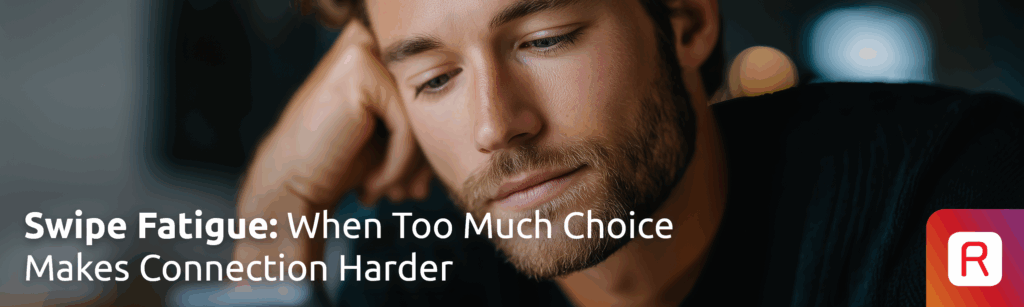
Swipe Fatigue: When Too Much Choice Makes Connection Harder
February is known as the month of love. A time when connection takes centre stage, whether that is romantic love, friendship, family, or the quieter connections we sometimes take for granted. At its core, it reminds us of a simple truth. Humans are wired to connect. We crave closeness, understanding, and the feeling of being truly seen.
In today’s digital world, technology plays a huge role in how we form and maintain relationships. From social media and messaging apps to video calls, streaming platforms and dating apps, we have more ways than ever to reach one another. In theory, this should make connection easier. In reality, many people feel overwhelmed, distracted, and paradoxically, more disconnected than before.
This growing experience is often referred to as swipe fatigue, also known as scrolling fatigue. It is a form of digital overwhelm that is quietly reshaping how we connect online.
What is swipe or scrolling fatigue?
Swipe or scrolling fatigue is the mental and emotional burnout that comes from constant digital consumption. It is not limited to dating apps. It shows up when social feeds never end, messages pile up, and content competes endlessly for our attention.
It can feel like being tired of scrolling, unmotivated to reply, or emotionally numb to content that once felt exciting or meaningful. Instead of curiosity, there is overwhelm. Instead of genuine online connection, there is noise.
When choice becomes the problem
One of the biggest drivers of scrolling fatigue is choice overload. We are surrounded by platforms designed to keep us engaged, offering infinite content, endless profiles, and constant updates. While this abundance promises freedom and possibility, it often has the opposite effect.
When everything demands attention, nothing truly holds it. Conversations become shorter and more surface level. Content blurs together. Connection starts to feel transactional rather than emotional.
What was meant to strengthen technology and relationships slowly begins to push us further apart.
The emotional cost of constant scrolling
Most content platforms are built to be fast and rewarding. Likes, notifications, and matches trigger dopamine responses that keep us coming back for more. While this can feel good in the moment, over time it can lead to digital burnout and emotional exhaustion.
Scrolling fatigue is not just about being tired of apps. It is often a form of emotional self protection. People begin to invest less, keep conversations light, and avoid vulnerability. Kindness becomes easier to overlook when interactions happen behind a screen. Genuine connection, which requires presence and openness, becomes harder to access.
This affects more than romantic relationships. It shapes how we show up for friends, family, and even ourselves. It also highlights the growing conversation around digital wellbeing and social media fatigue.
When Governments Step In: A Global Pause on Scrolling
In response to growing concerns about how endless scrolling and online interaction affect young people’s wellbeing, Australia recently introduced a world first social media ban for anyone under the age of 16. From December 2025, major platforms like Instagram, TikTok, Facebook and YouTube are legally required to block under 16s from holding accounts or face significant fines. This move aims to protect children from addictive feeds and harmful content, while encouraging more meaningful offline engagement.
This is not just regulatory noise. It reflects a broader global conversation about how digital spaces shape connection, attention and mental health. In a world where infinite scrolling can easily become overwhelming, this bold policy signals a growing desire to balance technology’s benefits with our need for real world presence, emotional safety and more intentional use.
Reclaiming connection in a digital world
Swipe fatigue does not mean technology has failed us. It means we need to use it more intentionally. Connection was never meant to be infinite or effortless. It requires attention, patience and care.
In a month that celebrates love in all its forms, it is worth slowing down. Scrolling less. Choosing depth over quantity. Remembering that behind every profile, post or message is a real person, not just another piece of content.
Connection is not about how many people we can reach. It is about how deeply we choose to be present.
Sometimes, the most powerful move is not another swipe, but a pause.
Swipe Fatigue: When Too Much Choice Makes Connection Harder
February is known as the month of love. A time when connection takes centre stage, whether that is romantic love, friendship, family, or the quieter connections we sometimes take for granted. At its core, it reminds us of a simple truth. Humans are wired to connect. We crave closeness, understanding, and the feeling of being truly seen.
In today’s digital world, technology plays a huge role in how we form and maintain relationships. From social media and messaging apps to video calls, streaming platforms and dating apps, we have more ways than ever to reach one another. In theory, this should make connection easier. In reality, many people feel overwhelmed, distracted, and paradoxically, more disconnected than before.
This growing experience is often referred to as swipe fatigue, also known as scrolling fatigue. It is a form of digital overwhelm that is quietly reshaping how we connect online.
What is swipe or scrolling fatigue?
Swipe or scrolling fatigue is the mental and emotional burnout that comes from constant digital consumption. It is not limited to dating apps. It shows up when social feeds never end, messages pile up, and content competes endlessly for our attention.
It can feel like being tired of scrolling, unmotivated to reply, or emotionally numb to content that once felt exciting or meaningful. Instead of curiosity, there is overwhelm. Instead of genuine online connection, there is noise.
When choice becomes the problem
One of the biggest drivers of scrolling fatigue is choice overload. We are surrounded by platforms designed to keep us engaged, offering infinite content, endless profiles, and constant updates. While this abundance promises freedom and possibility, it often has the opposite effect.
When everything demands attention, nothing truly holds it. Conversations become shorter and more surface level. Content blurs together. Connection starts to feel transactional rather than emotional.
What was meant to strengthen technology and relationships slowly begins to push us further apart
The emotional cost of constant scrolling
Most content platforms are built to be fast and rewarding. Likes, notifications, and matches trigger dopamine responses that keep us coming back for more. While this can feel good in the moment, over time it can lead to digital burnout and emotional exhaustion.
Scrolling fatigue is not just about being tired of apps. It is often a form of emotional self protection. People begin to invest less, keep conversations light, and avoid vulnerability. Kindness becomes easier to overlook when interactions happen behind a screen. Genuine connection, which requires presence and openness, becomes harder to access.
This affects more than romantic relationships. It shapes how we show up for friends, family, and even ourselves. It also highlights the growing conversation around digital wellbeing and social media fatigue.
When Governments Step In: A Global Pause on Scrolling
In response to growing concerns about how endless scrolling and online interaction affect young people’s wellbeing, Australia recently introduced a world first social media ban for anyone under the age of 16. From December 2025, major platforms like Instagram, TikTok, Facebook and YouTube are legally required to block under 16s from holding accounts or face significant fines. This move aims to protect children from addictive feeds and harmful content, while encouraging more meaningful offline engagement.
This is not just regulatory noise. It reflects a broader global conversation about how digital spaces shape connection, attention and mental health. In a world where infinite scrolling can easily become overwhelming, this bold policy signals a growing desire to balance technology’s benefits with our need for real world presence, emotional safety and more intentional use.
Reclaiming connection in a digital world
Swipe fatigue does not mean technology has failed us. It means we need to use it more intentionally. Connection was never meant to be infinite or effortless. It requires attention, patience and care.
In a month that celebrates love in all its forms, it is worth slowing down. Scrolling less. Choosing depth over quantity. Remembering that behind every profile, post or message is a real person, not just another piece of content.
Connection is not about how many people we can reach. It is about how deeply we choose to be present.
Sometimes, the most powerful move is not another swipe, but a pause.