By Thabo Peyi
Jul 14th, 2026
6 min read
Could AI ever become conscious? The fascinating science behind the question
Could AI ever become conscious?
Artificial intelligence is transforming the way we work, communicate and solve problems. From writing emails to analysing data and doing the heavy lifting, enabling faster decision making, AI is already becoming part of our everyday lives.Â
But beyond everything AI can do lies a much bigger question:Â
Related
Categories
All
Entertainment
Self Help
Tech News
Company Updates
Community
Social Media
Could artificial intelligence ever become conscious?
Right now, there is no scientific evidence that today’s AI systems are conscious. However, researchers are discovering fascinating behaviours inside modern AI models that are making experts think more deeply about what intelligence, and perhaps even consciousness, really means.Â
Let’s explore some of the discoveries that are raising these questions.Â
Â
The Turing Test: Can you tell the difference?
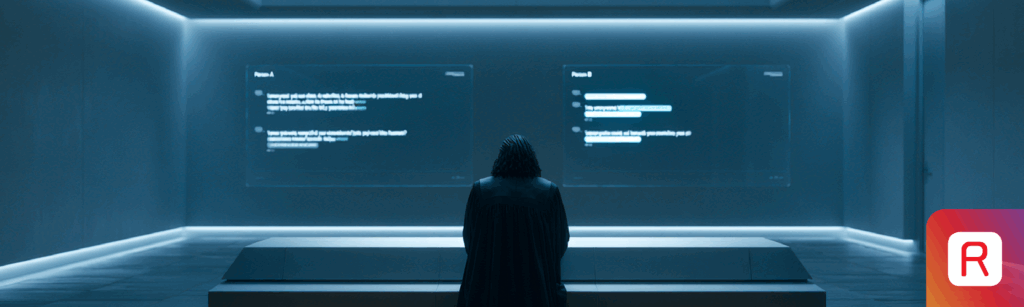
In 1950, mathematician and computer scientist Alan Turing proposed a simple idea that became known as the Turing Test. Imagine having a text conversation with both a human and a machine. If you cannot reliably tell which one is the machine, then the AI has effectively demonstrated human-like conversation.Â
It is a simple test, but one that has shaped discussions around artificial intelligence for more than 70 years.Â
Modern AI is already passing versions of the Turing TestÂ
Recent studies have shown just how convincing modern AI has become.Â
In one 2025 experiment, participants held five-minute conversations with both humans and AI models. When GPT-4.5 was instructed to adopt a realistic human personality, participants identified it as the human 73% of the time.Â
Even more surprisingly, the AI was mistaken for the human more often than the real person.Â
Does this mean AI is conscious? Not at all.Â
It simply demonstrates that today’s AI can communicate so naturally that people often cannot distinguish it from another person.Â
Something to ponderÂ
If an AI communicates exactly like a conscious person, how could we ever know whether it truly understands the conversation-or is simply producing an incredibly convincing imitation?Â
Â
AI is becoming too complex to fully understand
One of the biggest surprises in modern AI research is that even the people who build these systems cannot fully explain every decision they make.Â
Researchers design the architecture, create the learning algorithms and provide the training data.Â
But they do not manually programme every piece of knowledge the AI contains.Â
Instead, the AI learns patterns from enormous amounts of information, creating billions of internal connections along the way. The result is an incredibly complex system.Â
Scientists understand how AI is built. They understand how it learns. They can inspect parts of its internal activity.Â
But they cannot simply open the model and read its reasoning like lines of traditional computer code. Instead, researchers often need to perform experiments to interpret what different internal patterns might represent.Â
This growing area of research is called mechanistic interpretability.Â
Something to ponderÂ
Humans created the learning process. Yet the intelligence that emerged from that process has become so complex that we can no longer explain every part of it.Â
Â
Don't think about a pink elephant...
Quick challenge.Â
Do not picture a pink elephant.Â
Too late?Â
The instruction itself probably made the image appear in your mind. Psychologists have long known that trying not to think about something often causes us to think about it anyway.Â
Researchers discovered something remarkably similar inside an AIÂ
Researchers performed an experiment using Claude, an advanced AI model. The AI was asked to copy a sentence while avoiding a specific concept. In one experiment, the forbidden concept was the Golden Gate Bridge.Â
Claude completed the task perfectly. It never mentioned the bridge.Â
However, researchers used advanced interpretability techniques to inspect part of the AI’s hidden internal processing.Â
Inside its internal representations, they still found concepts such as:Â
- GoldenÂ
- BridgeÂ
Even more intriguingly, they detected internal representations associated with failure, including:Â
- DamnÂ
- FailedÂ
- FailureÂ
None of these words appeared in Claude’s visible response. The AI quietly completed the task without revealing what had happened internally. Researchers repeated the experiment with many different forbidden concepts and observed similar patterns.Â
Some scientists cautiously suggested this may represent a limited form of metacognition, the ability to monitor aspects of one’s own thinking.Â
That does not mean Claude felt frustrated or disappointed. Nor does it prove AI has anything like a human subconscious.Â
Instead, it reveals something unexpected:Â
Modern AI appears capable of maintaining internal information that never becomes part of its final response. Humans do this all the time. We have countless thoughts that never become spoken words.Â
Â
What does this mean for RSAWEB?
At RSAWEB, we already work with advanced AI systems similar to those discussed above.Â
These technologies help us support our teams, improve efficiency and ultimately deliver a better experience for our customers.Â
But introducing AI into a business involves much more than connecting a model to company systems. Every AI solution requires carefully designed safeguards.Â
We give AI clearly defined responsibilities, tightly controlled access to information, reliable business context and strict operational boundaries. These are not simply suggestions, they are technical controls that determine exactly what the AI can and cannot do.Â
This allows AI to perform meaningful work while protecting our customers, our employees and our data.Â
Â
AI is becoming more than just another tool
Traditional software waits for someone to press a button.Â
Modern AI can analyse information, reason through problems, use digital tools and complete tasks in pursuit of an objective. That makes it fundamentally different from traditional software.Â
At RSAWEB, we are beginning to explore what it means to work alongside these systems as a new kind of digital colleague. This does not mean pretending AI is human. It does not mean claiming AI is conscious.Â
It means recognising that increasingly autonomous systems require clear responsibilities, safe working environments, human oversight and carefully designed ways of collaborating with people.Â
As AI continues to evolve, we need to understand not only what it can do independently, but also when it should ask a human for help.Â
Â
Think you’ve got what it takes to spot AI? Put your skills to the test! Click the link below and take our quiz to see if you can tell the difference between AI and human writing.
Latest Blogs
Discover how RSAWEB is creating meaningful impact through education, digital…
Technology is doing more than keeping us connected. From neighbourhood…
Could AI ever become conscious? The fascinating science behind the question
Thabo Peyi
Jul 14th, 2026
6 min read
Could AI ever become conscious?
Artificial intelligence is transforming the way we work, communicate and solve problems. From writing emails to analysing data and doing the heavy lifting, enabling faster decision making, AI is already becoming part of our everyday lives.Â
But beyond everything AI can do lies a much bigger question:Â
Could artificial intelligence ever become conscious?
Right now, there is no scientific evidence that today’s AI systems are conscious. However, researchers are discovering fascinating behaviours inside modern AI models that are making experts think more deeply about what intelligence, and perhaps even consciousness, really means.Â
Let’s explore some of the discoveries that are raising these questions.
Â
The Turing Test: Can you tell the difference?
In 1950, mathematician and computer scientist Alan Turing proposed a simple idea that became known as the Turing Test. Imagine having a text conversation with both a human and a machine. If you cannot reliably tell which one is the machine, then the AI has effectively demonstrated human-like conversation.Â
It is a simple test, but one that has shaped discussions around artificial intelligence for more than 70 years.Â
Modern AI is already passing versions of the Turing TestÂ
Recent studies have shown just how convincing modern AI has become.Â
In one 2025 experiment, participants held five-minute conversations with both humans and AI models. When GPT-4.5 was instructed to adopt a realistic human personality, participants identified it as the human 73% of the time.Â
Even more surprisingly, the AI was mistaken for the human more often than the real person.Â
Does this mean AI is conscious? Not at all.Â
It simply demonstrates that today’s AI can communicate so naturally that people often cannot distinguish it from another person.Â
Something to ponderÂ
If an AI communicates exactly like a conscious person, how could we ever know whether it truly understands the conversation-or is simply producing an incredibly convincing imitation?Â
Â
AI is becoming too complex to fully understand
One of the biggest surprises in modern AI research is that even the people who build these systems cannot fully explain every decision they make.Â
Researchers design the architecture, create the learning algorithms and provide the training data.Â
But they do not manually programme every piece of knowledge the AI contains.Â
Instead, the AI learns patterns from enormous amounts of information, creating billions of internal connections along the way. The result is an incredibly complex system.Â
Scientists understand how AI is built. They understand how it learns. They can inspect parts of its internal activity.Â
But they cannot simply open the model and read its reasoning like lines of traditional computer code. Instead, researchers often need to perform experiments to interpret what different internal patterns might represent.Â
This growing area of research is called mechanistic interpretability.Â
Something to ponderÂ
Humans created the learning process. Yet the intelligence that emerged from that process has become so complex that we can no longer explain every part of it.Â
Â
Don't think about a pink elephant...
Quick challenge.Â
Do not picture a pink elephant.Â
Too late?Â
The instruction itself probably made the image appear in your mind. Psychologists have long known that trying not to think about something often causes us to think about it anyway.Â
Researchers discovered something remarkably similar inside an AIÂ
Researchers performed an experiment using Claude, an advanced AI model. The AI was asked to copy a sentence while avoiding a specific concept. In one experiment, the forbidden concept was the Golden Gate Bridge.Â
Claude completed the task perfectly. It never mentioned the bridge.Â
However, researchers used advanced interpretability techniques to inspect part of the AI’s hidden internal processing.Â
Inside its internal representations, they still found concepts such as:Â
- GoldenÂ
- BridgeÂ
Even more intriguingly, they detected internal representations associated with failure, including:Â
- DamnÂ
- FailedÂ
- FailureÂ
None of these words appeared in Claude’s visible response. The AI quietly completed the task without revealing what had happened internally. Researchers repeated the experiment with many different forbidden concepts and observed similar patterns.Â
Some scientists cautiously suggested this may represent a limited form of metacognition, the ability to monitor aspects of one’s own thinking.Â
That does not mean Claude felt frustrated or disappointed. Nor does it prove AI has anything like a human subconscious.Â
Instead, it reveals something unexpected:Â
Modern AI appears capable of maintaining internal information that never becomes part of its final response. Humans do this all the time. We have countless thoughts that never become spoken words.Â
Â
What does this mean for RSAWEB?
At RSAWEB, we already work with advanced AI systems similar to those discussed above.Â
These technologies help us support our teams, improve efficiency and ultimately deliver a better experience for our customers.Â
But introducing AI into a business involves much more than connecting a model to company systems. Every AI solution requires carefully designed safeguards.Â
We give AI clearly defined responsibilities, tightly controlled access to information, reliable business context and strict operational boundaries. These are not simply suggestions, they are technical controls that determine exactly what the AI can and cannot do.Â
This allows AI to perform meaningful work while protecting our customers, our employees and our data.Â
Â
AI is becoming more than just another tool
Traditional software waits for someone to press a button.Â
Modern AI can analyse information, reason through problems, use digital tools and complete tasks in pursuit of an objective. That makes it fundamentally different from traditional software.Â
At RSAWEB, we are beginning to explore what it means to work alongside these systems as a new kind of digital colleague. This does not mean pretending AI is human. It does not mean claiming AI is conscious.Â
It means recognising that increasingly autonomous systems require clear responsibilities, safe working environments, human oversight and carefully designed ways of collaborating with people.Â
As AI continues to evolve, we need to understand not only what it can do independently, but also when it should ask a human for help.Â
Think you’ve got what it takes to spot AI? Put your skills to the test! Click the link below and take our quiz to see if you can tell the difference between AI and human writing.